A BI migration plan that starts with a file list is already going wrong. The estate is not the work and the import is not the work. The work is agreeing what the numbers mean, and every plan that skips it discovers it in week seven with no budget left for the conversation.
Here is a sequence that puts the hard part early, keeps the old estate running, and gets something real in front of people in a fortnight.
gantt
    dateFormat  YYYY-MM-DD
    axisFormat  %b %d
    todayMarker off
    section Prove it
    Deploy, import real workbooks        :done, p1, 2026-01-05, 14d
    section Agree it
    Settle the top metrics  (slips here) :active, p2, 2026-01-19, 28d
    section Compare it
    Run both estates, reconcile          :p3, 2026-02-16, 28d
    section Move it
    Readers first, then authors          :p4, 2026-03-16, 21d
Two weeks over, and all of it in the definitions phase — which is the phase every plan underestimates and the only one where the overrun bought something. The 379 dashboards they did not migrate are why the reconciliation phase hit its estimate.
Weeks 1–2 — Prove it on your own worst workbook
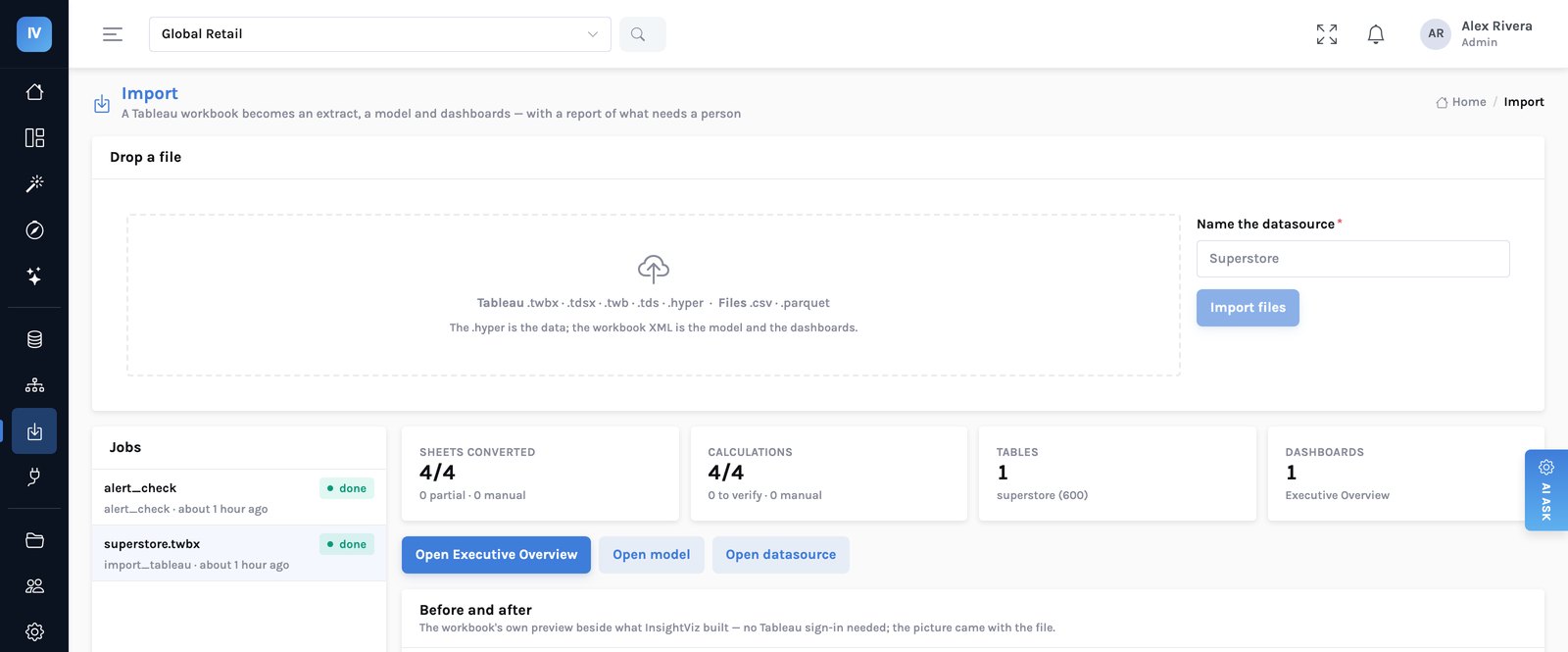
Deploy into your cloud with your identity provider, then import real workbooks. Not the clean demo one — the oldest, the one with the most calculated fields, and the one the board sees.
You get a fidelity report before committing to anything: sheet by sheet, calculation by calculation, filter by filter. The ratio of converted to needs-review across three real workbooks predicts the estate better than any survey.
| Who is in the room | For what | How long |
|---|---|---|
| A platform engineer | Deploy the container, the bucket and the database. Wire the identity provider. | 2–3 days |
| The analyst who owns the worst workbook | Choose what to import, read the fidelity report, say whether the shortfalls matter. | 2 days |
| Nobody else | Deliberately. This phase produces evidence, not consensus. | — |
The deliverable of phase one is a number, not a demo
By the end of week two you should be able to say: “across three representative workbooks, N% of sheets converted cleanly and M calculations need a person.” That sentence is what the rest of the plan is built on, and it is the one thing a vendor cannot give you.
Weeks 3–6 — Agree the definitions
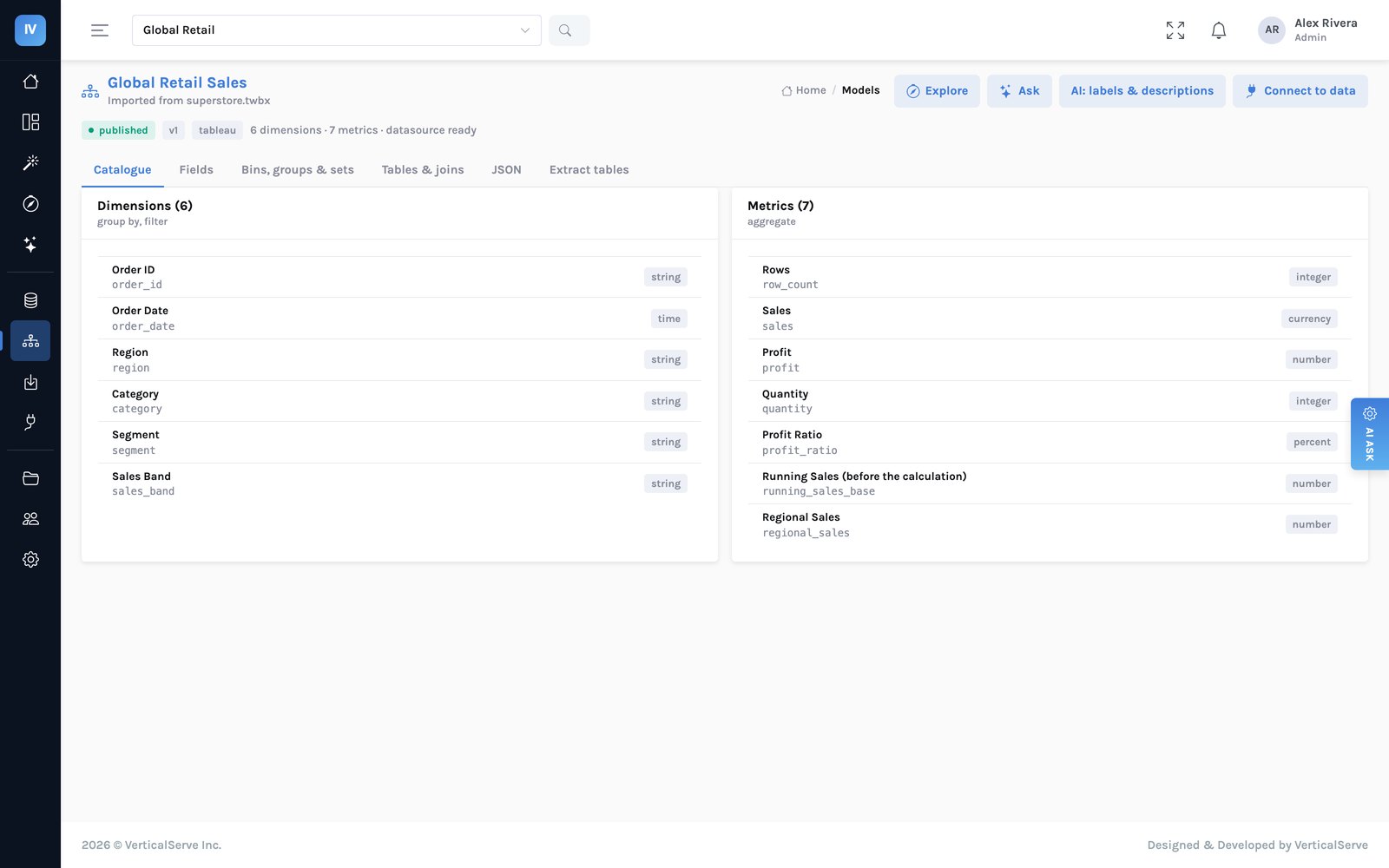
This is the phase that slips, the phase that matters, and the only one where the vendor cannot help much. The imported field names give you a first draft of the business model — considerably better than a blank page — and then three teams discover their definitions of net revenue disagree.
The migration does not create the disagreement. It ends a decade of being able to avoid it, at a moment when you have budget and attention — which is the best time you will ever get.
Three rules that keep this phase from running away:
- Settle the top ten, not all of them. A small number of metrics carry almost every decision. The long tail can drift another year without anyone noticing.
- The people who own the numbers, not the people who own the tool. If this is run by the BI team alone, the definitions will be technically correct and commercially wrong, and finance will reject them in month four.
- Keep a decision log. “Net revenue excludes intercompany, decided 14 March, owner: Group FC.” In eighteen months somebody will reopen it, and without the log they will reopen all of it.
Budget four weeks and expect six
Every migration we have seen underestimates this phase and none has regretted spending longer on it. If it finishes early, that usually means one team decided on behalf of the others and the argument has been deferred rather than settled.
Weeks 6–10 — Run both, and reconcile
The migrated dashboards run alongside the originals. Nothing is switched off. The only activity that matters is comparing numbers and working the review list.
| Activity | What good looks like | Watch for |
|---|---|---|
| Reconcile against exported crosstabs | Pick the ten dashboards people actually open. Export the original as a crosstab, compare cell for cell. | Differences are usually a filter, not a calculation |
| Work the review list | Every sheet the report flagged gets a person and a verdict: fixed, accepted, or dropped. | “We will come back to it” means dropped |
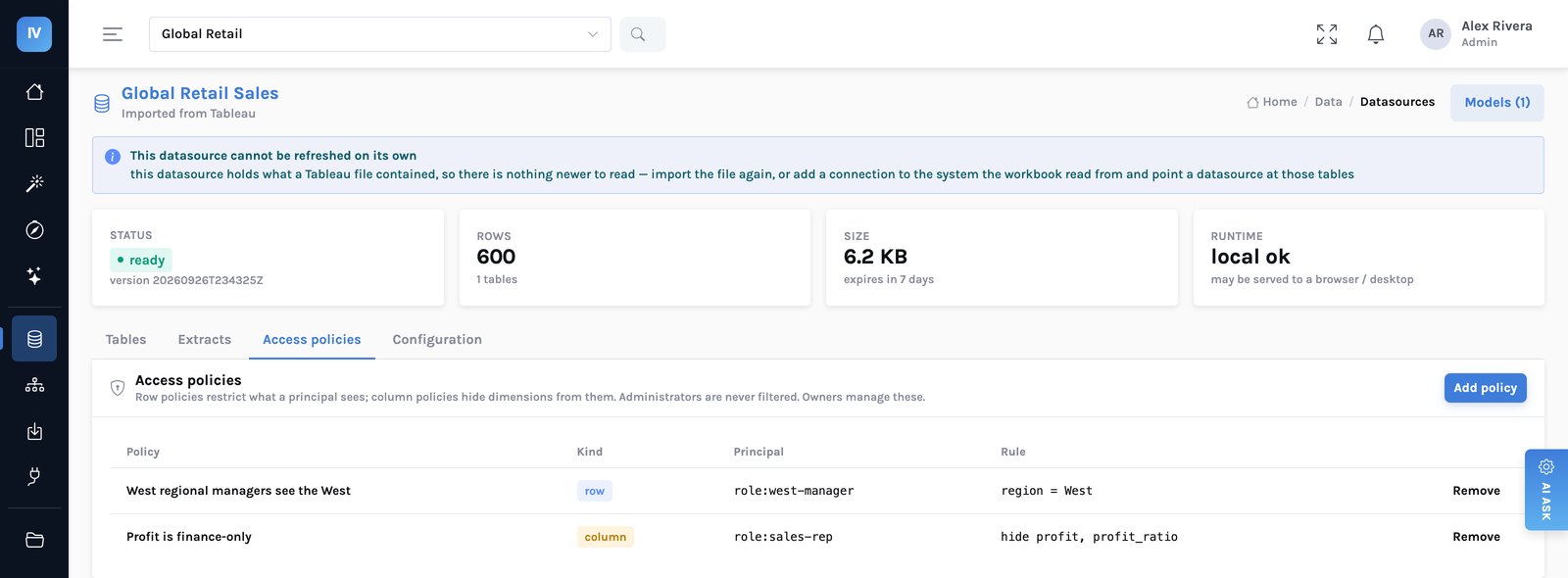
| Set access rules on the data | Row and column policies on the datasources, not per dashboard. Test every surface with a restricted account. | At least one surface you had not thought of |
| Retire, do not migrate | Most estates have three to five times more dashboards than anyone opens. Use the usage logs. | Migrating everything is the most expensive mistake available |
That last row deserves emphasis. The single biggest cost overrun in BI migration is treating the file list as the scope. Start from what people opened last quarter.
Weeks 10–13 — Move the readers first
Readers are the largest group and the easiest to move, because they only filter and read. They also account for most of your licence bill, so moving them first is where the commercial case actually lands.
The BI team goes first because they are keenest. Readers stay on the old estate, both run in full, and the licence saving arrives in month nine if at all.
Readers need no training — filter, drill, export, ask. The saving starts immediately, and authors follow as their own workbooks are migrated rather than all at once.
The old estate stays until its last-opened dashboard is retired. Plan to pay for both for a quarter. Any plan that does not is a plan to rush the reconciliation.
xychart-beta horizontal
    title "Weeks: planned against actual, by phase"
    x-axis ["Deploy", "Definitions", "Reconcile", "Readers"]
    y-axis "Weeks over or under plan" -1 --> 4
    bar [0, 3, 0, -1]
Where it stalls, and the tell
| Stall | The tell | What to do |
|---|---|---|
| The definitions phase | Meetings that end with “let us take that offline” three times running. | Escalate to whoever owns the P&L. This is a business decision being treated as a technical one. |
| The review list | It has not shrunk in two weeks. | Assign each item an owner and a date, or accept it explicitly. An unowned list is a dropped list. |
| Reconciliation | “Close enough” appears in a status update. | Stop. Every unexplained difference is a trust problem that surfaces later, in public. |
| Nobody uses the new thing | Migrated dashboards, flat usage. | You migrated dashboards nobody opened. Go back to the usage logs. |
What we would not promise
- Thirteen weeks for a large estate. This is the sequence for a first meaningful tranche — a department, a few dozen dashboards. A thousand-workbook estate is several of these, run in parallel, over a year.
- That the fidelity report will be all green. On an old workbook it will not be, and a vendor promising otherwise has not read your workbook.
- That we can settle your definitions. We can surface the disagreements in week three instead of year five. Somebody in your organisation still has to decide.
What converts, artefact by artefact → · How to tell whether it worked →