Ask a BI analyst what they spend their week on and you get a version of the same list: variations of existing dashboards, the same question from a different team, reconciling two numbers that should match, and — near the end, if nothing caught fire — the analysis they were hired for.
The useful question is not whether AI helps. It is which items, because the honest answer is not all of them.
Nine of fourteen items — a little over five hours — were filters, limits and exports. One item was the job she was hired for, and it happened on Thursday afternoon because nothing had caught fire.
The problem was never that analysts are slow. It is that the organisation has no way to ask a small question without going through one.
The queue, sorted by what it actually is
| Request type | Share of Dana’s week | Who should handle it |
|---|---|---|
| A filter, a limit, a date range | ~5 hrs | Nobody — the reader, in the moment |
| One number, once | ~1 hr | The assistant |
| Two numbers disagree | 3 hrs | A person, once — then never again |
| Build a dashboard for X | 1.5 days | A draft in minutes, a person to finish it |
| Why did this happen? | 4 hrs | An analyst. This is the job. |
| A new source or join | 0 this week | An analyst. Always. |
What the assistant takes, and what it leaves
Two ways this makes the job worse
Both are real, both are avoidable, and both come from getting the order wrong.
Point it at raw tables and it answers confidently and inconsistently. Dana’s queue does not shrink — it changes shape, from “build me this” to “check whether this answer is right”, which is slower, less satisfying, and never ends.
It can only name metrics and dimensions a person defined, using joins a person declared. Answers are checkable in seconds because each shows its working, so nobody re-derives them.
The second failure is subtler and nobody predicts it
If the assistant is good, people stop asking for dashboards — including for numbers they check every morning. A figure someone looks at daily belongs on a page, not behind a question that has to be re-asked and re-read each time. Watch for teams whose “dashboard” is a saved question they run manually; that is a page waiting to be built.
The work that grows instead
This is the actual change to the job, and most AI-for-BI pitches skip it. If the assistant is bounded by the model, the model is now the product, and maintaining it is the highest-leverage thing Dana does.
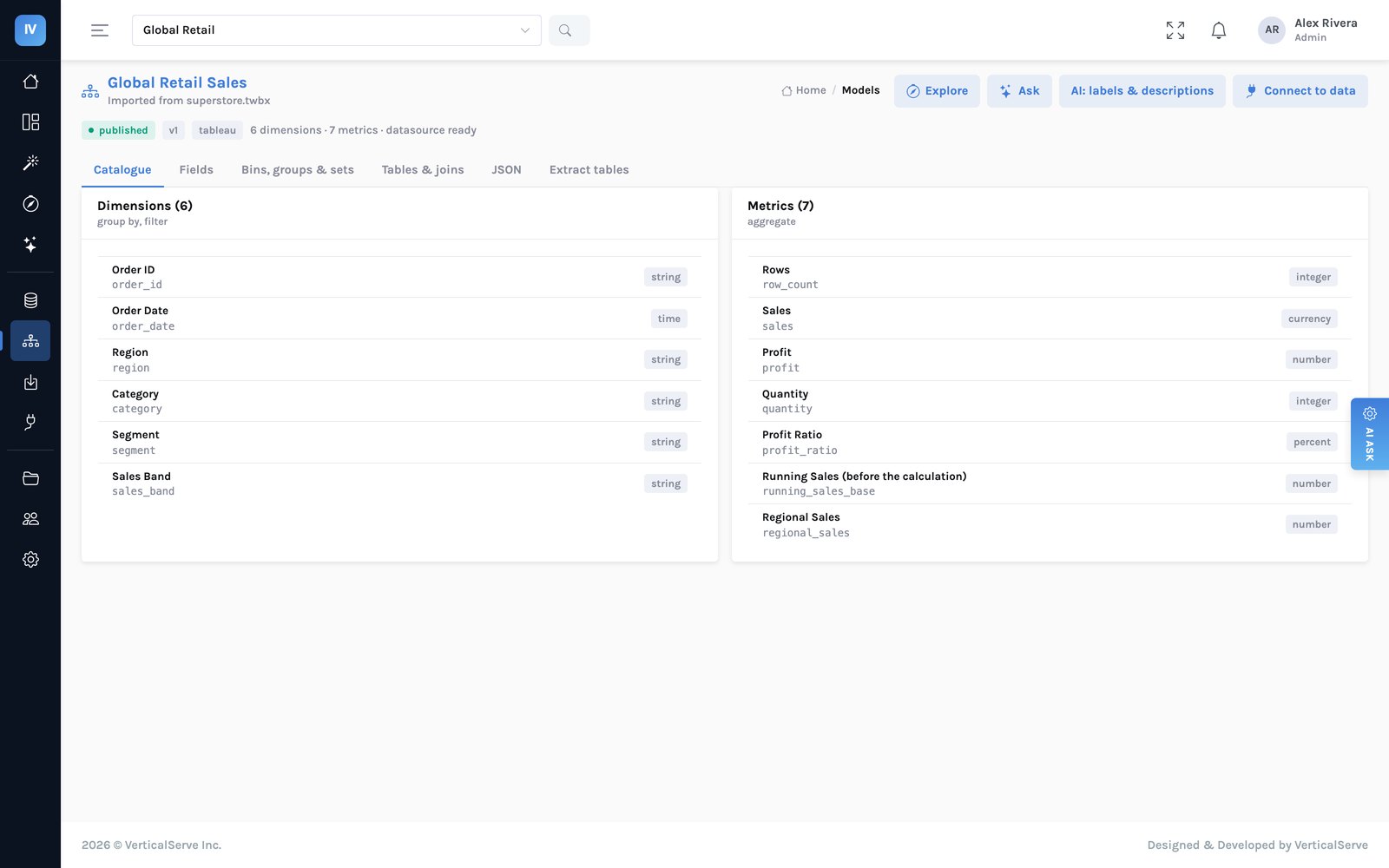
| What she maintains | Why it matters | How she knows what to fix |
|---|---|---|
| Descriptions | The difference between the assistant picking the right metric and a plausible neighbour. | Answers that were technically right and not what was asked |
| Synonyms | People ask in their own words. Every synonym retires a class of failure. | The refusal log — a prioritised list written by users without being asked |
| Declared joins | The assistant cannot pick a wrong join, but it also cannot notice one. That error moved to her. | Reconciliation differences |
| Hierarchies | Region → category → product is why Marcus in the Central region can drill without asking. | Drill requests that hit a dead end |
Building, when building is still the answer
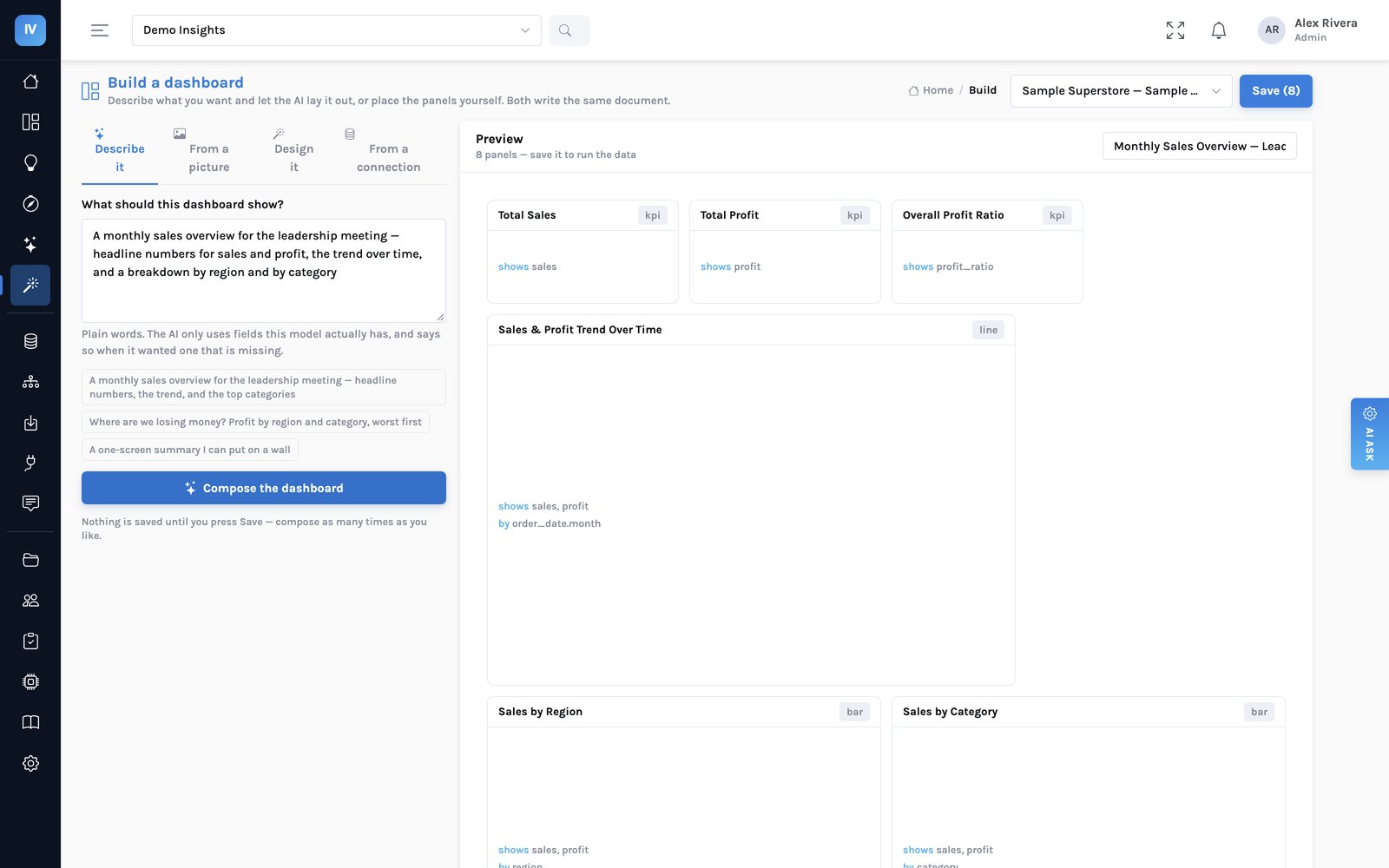
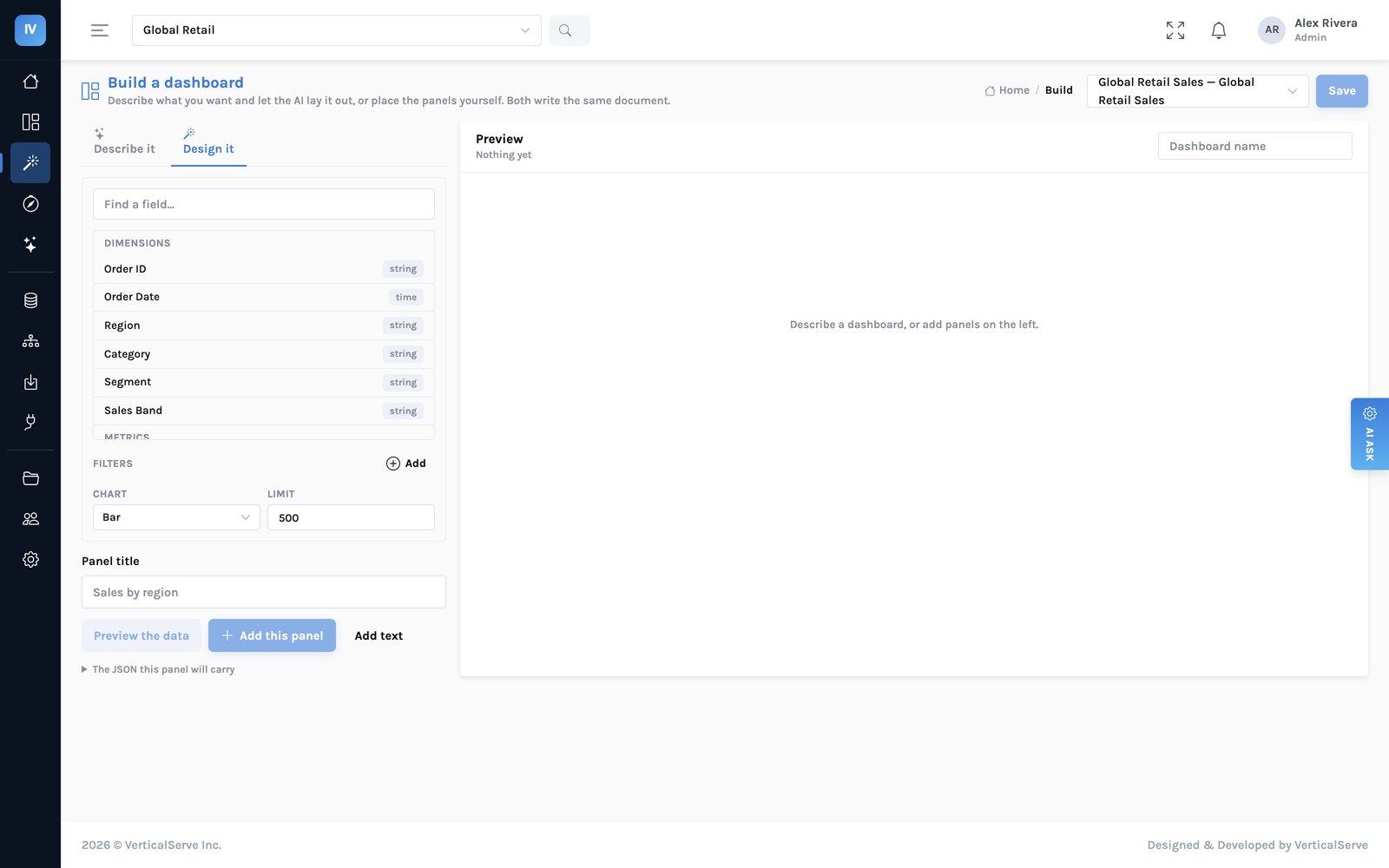
For item 7, the draft is no longer the work.
Exploration is still the job
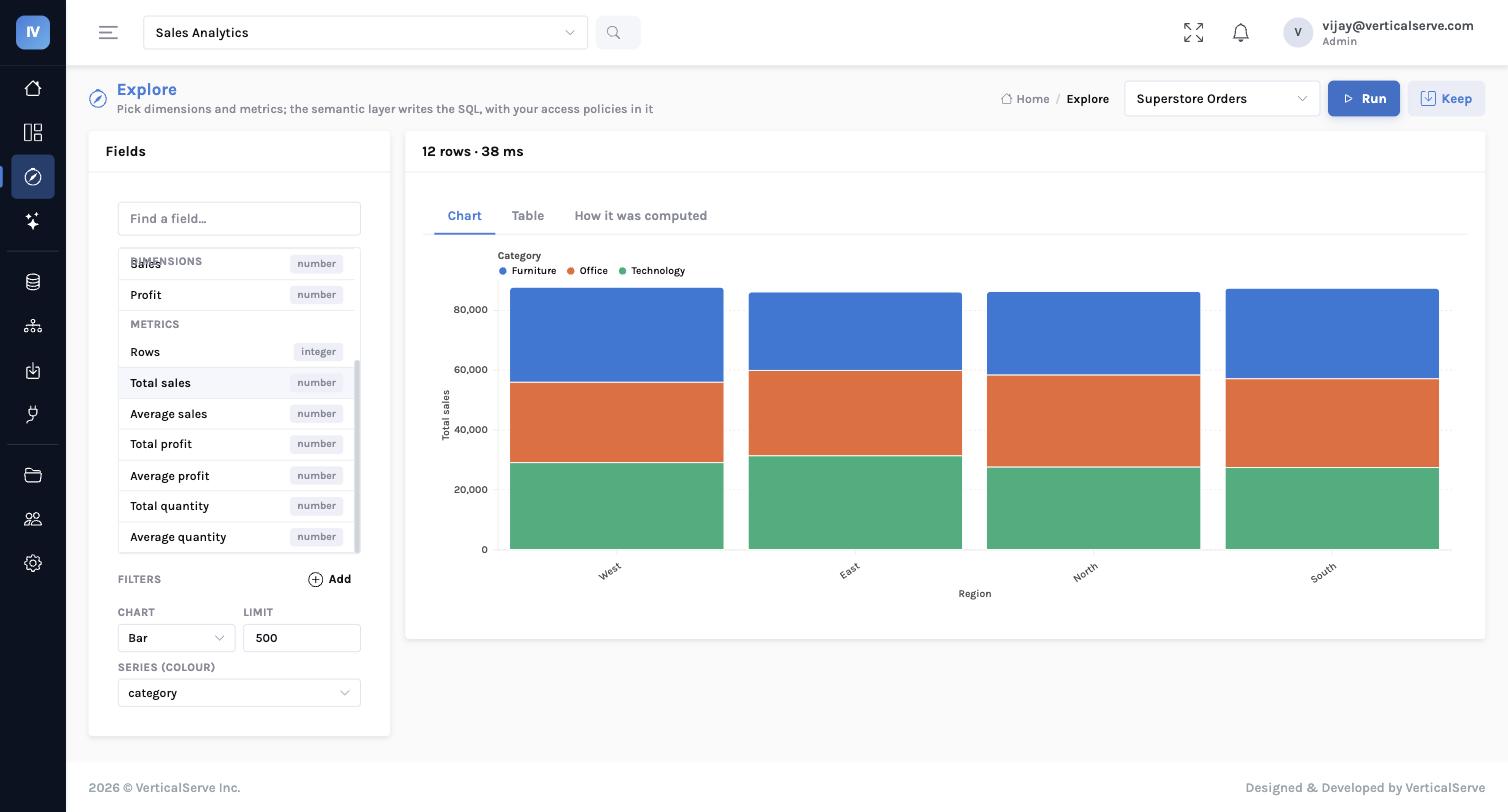
Item 8 — why did the North fall off — is not going anywhere and should not. It requires knowing the business, the data, and what the answer will be used for.
flowchart TD
    Q["A request arrives"] --> T{"Can the model
already express it?"}
    T -->|"yes, small"| A["The requester answers it
filter, drill, or ask"]
    T -->|"yes, a page"| B["Draft it, then finish it
hours, not days"]
    T -->|"no"| C["An analyst:
new source, new join,
new definition"]
    C --> M["The model grows"]
    M -.->|"next time"| T
    style A fill:#e6f7f2,stroke:#9fd8c9
    style C fill:#eef1ff,stroke:#c7cdf2
    style M fill:#fff4e6,stroke:#f0cb9a
Three honest caveats
- The model has to exist first. On an estate with no agreed definitions, the assistant industrialises the drift. Model first, assistant second — in that order, or Dana spends her week checking answers.
- Someone owns the catalogue. Descriptions and synonyms decay as the business changes. Unowned, the assistant quietly gets worse and nobody can say when it started.
- Is it a better job? Less assembling, more defining. Most analysts say yes. The ones who say no usually liked the dashboard-building specifically, which is worth knowing before you roll it out rather than after.
The mechanism that bounds the assistant → · Why item 6 happened at all →